Having completed an appraisal of the problem, the analysis from Step 1 should lead to a clearer statement of the problem as well as identification of one, or probably several, desired goals/outcomes as a result of the reform initiative.
Goals should reflect the desired change in women’s and girls’ lives
A goal statement should reflect the change in women’s and girls’ lives that will result from the programme once implemented. Programmes focused on engaging the justice sector relative to violence against women often reflect these common goals:
- Make the justice sector more effective in protecting victim safety
- End impunity for violence against women
- Decrease the gap between norms in the national constitution and laws and the body of international human rights norms
- Create alternatives to justice practices that harm women or make them more vulnerable
- Exclude customary or religious justifications for gender-based violence.
- Modify existing practices in the informal system that are in conflict with formal laws on violence against women and girls
- Decrease discrimination against women in the justice sector
- Increase women’s participation as decision-makers and leaders in the justice sector
- Increase survivors’ comfort in seeking remedies from the justice sector
- Increase the knowledge about violence against women and women’s human rights among key actors in the justice sector
- Increase women’s knowledge about their right to seek a remedy in the justice sector
- Increase accountability and transparency in the justice sector
- Mandate the justice sector to improve risk-management processes
- Make the justice sector more responsive to community needs
- Increase monitoring and oversight of the justice sector
- Ensure that women and girls are not re-victimized by the justice sector
- Ensure that a case which has been processed under a religious or customary judicial system may still be brought under the state’s formal justice system
- Ensure that survivors are not coerced into using a specific type of justice mechanism
- Reduce corruption
Writing goals in a specific way so as to reflect a human-rights-based approach can help ensure a programme’s success is measurable and meaningful.
Taking the examples above, instead of stating that the programme will “reduce corruption,” a rights-based approach would describe the goal as: “Women victims of violence are able to access the justice mechanism of their choice and receive a timely, effective remedy without having to pay bribes or provide other inducements to decision-makers and gatekeepers.”
See an example of specific goals and objectives for a judicial training programme.
Prioritizing goals maximizes programme effectiveness
If the appraisal leads to multiple desired goals, planners will need to prioritize. The following considerations and guidelines may help in that process (UNDP, 2005, pp.27-28):
- Which goals are most important to women and girls who are directly impacted?
- Which goals could include an immediate benefit for women’s and girls’ safety and access to justice?
- Identify would-be “spoilers” and potential champions - what kind of political opportunities are available for action on each outcome?
- Adopt multiple timeframes and categorize goals into shorter or longer term.
- Which goals can be realistically achieved through advocacy by your organization or coalition of organizations?
It can be difficult to focus in on a manageable project, especially when an appraisal of the sector reveals multiple issues that all affect women’s and girls’ safety and human rights. Including stakeholders and community members in the process of prioritizing desired outcomes is an important step and can help generate buy-in up front for programming initiatives.
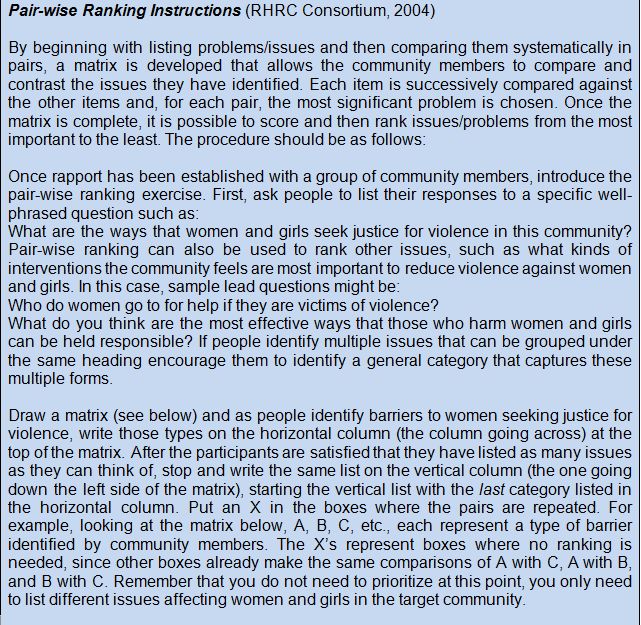
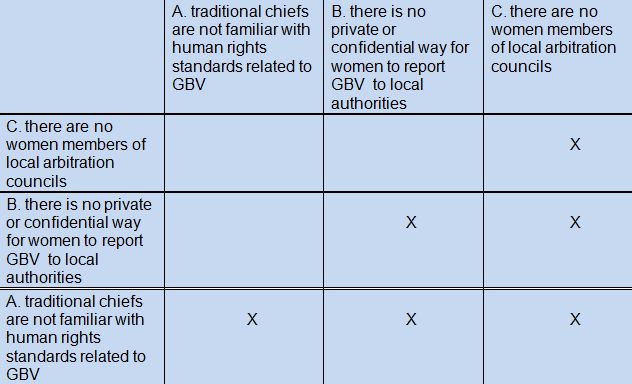
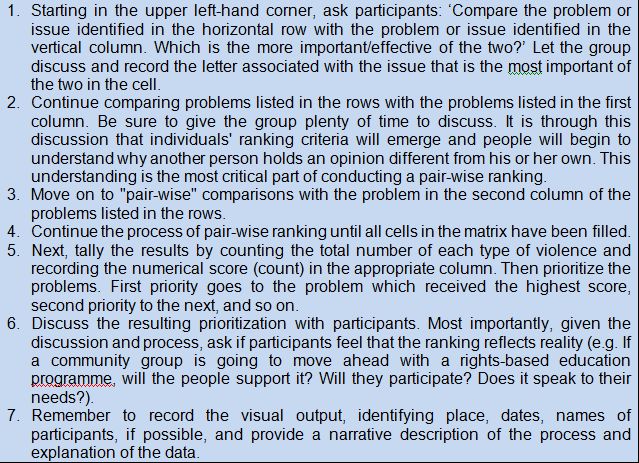
One method of participatory prioritization is pair-wise ranking. This method allows communities and stakeholders to systematically examine an array of issues and come to conclusions about which issues are most critical.
Another method for prioritizing goals and associated activities is visualizing the situation in terms of pits and ladders.
Pits and Ladders Instructions (CARE, 2004)
Using a simple ladder image, organizations can describe the problem they are facing as a pit that they need to climb out of through programme activities. The goal is the ground at the top of the pit, the place where the community will arrive once successful programming is implemented. The rungs on the ladder represent the steps that the programme will undertake to make the desired change.